
You already know the thing doesn't work. You set a goal in January with genuine conviction, maybe even excitement. By March, you're either ghosting the gym or pretending you never said you'd meditate daily.
The problem isn't your willpower. It's that you're planning blind.
Most people make resolutions by guessing at what they think they should want, based on what everyone else seems to want. Lose weight. Get promoted. Travel more. These are safe answers, the kind you can say out loud at parties without anyone judging. But they're not necessarily your answers.
An annual review—a real one, not a five-minute scrolling through your Instagram—forces you to actually look at what happened to you in the past year, what mattered, what didn't, and why. That's the information you need to make a plan that doesn't suck.
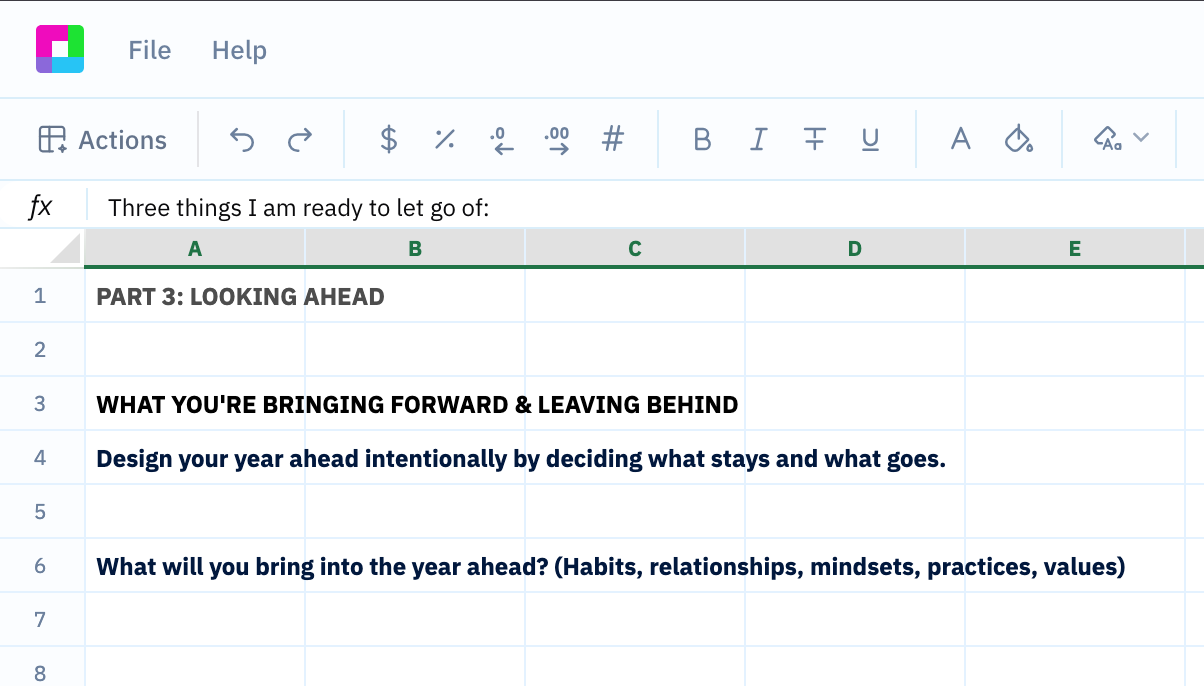
I believe that self growth and helping others grow is super important. If you are interested in reviewing your 2025 so you can have a better 2026 please check out the year in review questionnaire.
The Stuff People Avoid Noticing
Here's what makes most people uncomfortable about reviewing their year: it requires you to admit things you've been half-aware of but haven't fully processed.
That relationship that's been draining your energy for months? You probably already know. But you haven't written it down. You haven't looked at the pattern—the specific moments when you felt worse after talking to that person, the promises they made and broke, the way conversations always end with you apologizing for something that wasn't your fault.
The same applies to work. You might feel stuck in a job, but actually mapping out what energizes you versus what exhausts you—the specific projects, the types of people, the actual hours you spend in meetings—reveals whether you need a new job or just need to say no to more things.
Or goals. You didn't accomplish the thing you said you would. Why? Was it actually impossible, or did you run into an obstacle you could have anticipated if you'd broken the goal into smaller steps? This matters because it changes how you approach the next goal.
Why Blind Spots Stay Blind
Our brains are lazy about recognizing patterns in our own lives. We're excellent at seeing when other people are stuck in a loop, but we're remarkably good at self-deception. We explain away failures as circumstances instead of choices. We miss the person who consistently makes us feel small because we're focused on their good qualities. We keep doing things that drain us because we never stop to ask whether they actually matter.
An annual review forces you to gather evidence. You look at your calendar. You flip through photos. You read through old emails and journal entries. You check your health data. You notice what you spent money on. These aren't opinions—they're facts about what actually happened.
When you organize this information chronologically and by theme, patterns become impossible to ignore. You can see, concretely, that you felt energized by three specific types of work and miserable doing five others. You can count the relationships that left you feeling worse versus better. You can track which habits actually improved your life and which ones you kept out of obligation or inertia.
This is the foundation you need to plan something that will actually work.
The Difference Between Guessing and Knowing
Say you decide to "be healthier" next year. Vague. You might hit the gym once a week for three weeks and then stop.
But if you review the past year, you notice that you felt most energized on days you worked out in the morning before work, that you absolutely hated the gym you joined but loved running outside, and that you stuck with a habit when you did it with a friend but not alone.
With that information, your plan isn't "be healthier." It's "run outside three mornings a week with Sarah before 7 AM." That's specific enough to actually do.
The same thing applies to career, relationships, creativity, everything. The people who end up making real changes in their lives aren't the ones with more willpower. They're the ones with better information about themselves.
What This Actually Takes
A real annual review takes 3-4 hours. You need to do it somewhere quiet without your phone. You need to write things down, not just think about them. Writing forces your brain to be more concrete and specific than thinking does—you can't just waft around in vague feelings.
You'll go through your calendar, your photos, your emails, your journal. You'll ask yourself hard questions about what you're proud of and what you regret. You'll look at your relationships honestly and decide which ones to invest in and which ones to distance from. You'll acknowledge what limited you—the fear, the beliefs, the obstacles—and decide whether those same things will limit you next year or whether you're ready to do something different.
Some of the questions will feel uncomfortable. (What did you avoid because you were scared? What are you still angry about? What relationships are actually draining you?) That's the point. That's where the information is.
By the time you finish, you won't just have a list of resolutions. You'll have a clear picture of who you are, what matters to you, and what actually worked. You'll have patterns you can build on and obstacles you can address. You'll have concrete, specific goals based on evidence instead of wishes.
And when February comes around and you want to quit, you have something to come back to.
The Real Reason to Do This
The deepest reason to do an annual review isn't about productivity or self-improvement or any of that stuff. It's that most people go through their entire lives half-asleep, reacting to events, repeating patterns, doing things out of habit or obligation without ever stopping to ask if these are the things they actually want to be doing.
An annual review is just hitting pause. It's saying: okay, let me look at what actually happened. Let me notice the patterns. Let me decide what to keep and what to let go of. Let me be honest about what I want, not what I think I should want.
That takes work. But once you do it, you get to spend the next year building on that honesty instead of guessing.
That's why it matters.
Download the annual review template for free.
